Why Everyone is Buying the Hw Q800C (Full Review)
Introduction: My Search for the Perfect Sound
For years, I was that person who insisted that a soundbar could never truly replace a "real" home theater system. I grew up around bulky AV receivers, tangled copper wires snaking under the rug, and those massive floor-standing speakers that take up half the living room. But as I moved into a smaller apartment and started prioritizing a cleaner, more minimalist aesthetic, the desire to simplify my setup became overwhelming. I spent months researching the middle ground—the "Goldilocks" zone of soundbars where you aren't paying four figures for a flagship model, but you aren't settling for the tinny, hollow sound of a budget bar.
After reading endless forums and watching countless teardowns, I landed on the Samsung HW-Q800C. I’ve been using this system for nearly six months now, integrated into my daily routine of gaming, late-night movie binges, and casual Spotify streaming. What I found was a system that challenged my skepticism about wireless audio. It isn't perfect, and there are a few quirks that still bug me, but I finally understand why this specific model has become the de facto recommendation for anyone looking to bridge the gap between "good enough" and "audiophile-adjacent."
The First Impression: Unboxing and Physical Presence
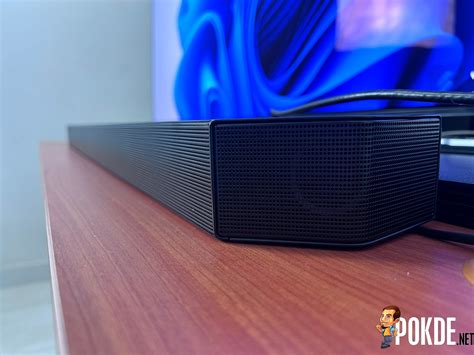
In my experience, the first few minutes with a product tell you a lot about the engineering philosophy behind it. The Q800C arrived in that classic L-shaped box that soundbar manufacturers love. When I first pulled the main bar out, I was surprised by its weight. It feels dense and substantial, not like the hollow plastic shells I’ve felt in big-box stores. The metal grille design is a huge win for me. I’ve owned bars with fabric covers in the past, and they are absolute magnets for dust and cat hair that you can never quite get out. The Q800C is easy to wipe down, which keeps my setup looking fresh.
The subwoofer, however, is a bit of a beast. It’s significantly larger than the subwoofers that come with the lower-tier Q600 or Q700 series models. Finding a spot for it in my living room took some trial and error. Because it’s an 8-inch driver, it needs some breathing room to avoid becoming "boomy." One thing that bothered me during the setup was the length of the power cables. If you don't have an outlet directly behind your media console, you might find yourself reaching for an extension cord sooner than you’d like.
Daily Performance: How It Actually Sounds
What I found was that the Q800C excels at something many soundbars struggle with: vocal clarity. I’m one of those people who used to watch every movie with subtitles turned on because modern mixes often bury dialogue under explosive sound effects. After testing for the first week, I realized I hadn't turned the subtitles on once. The dedicated center channel does a remarkable job of lifting voices out of the mix without making them sound artificial or "processed."
Movies and Dolby Atmos
Watching Dune: Part Two was the moment I realized I had made the right choice. This bar features a 5.1.2 channel configuration. The "2" represents the up-firing drivers intended to bounce sound off the ceiling to simulate height. In my living room, which has standard 9-foot flat ceilings, the effect was surprisingly convincing. During the sandstorm sequences, I noticed that the sound didn't just feel like it was coming from the TV; it felt like it had a vertical dimension. However, I should be honest: it’s not the same as having ceiling-mounted speakers. The "overhead" sounds feel more like they are hovering around the top of the TV rather than directly above my head.
The Bass Performance
The 8-inch subwoofer is the star of the show here. Many soundbar subs just produce "low noise," but this one produces actual notes. I’ve been using this for gaming—specifically Call of Duty and Cyberpunk 2077—and the impact of explosions is physical. You can feel the air move. One thing I noticed that disappointed me slightly was that out of the box, the bass was a bit too aggressive. I had to go into the settings and drop the sub-level to -2 to keep it from drowning out the mid-range during casual TV shows. Once calibrated, though, the transition between the bar and the sub felt seamless.
Shop the latest Electronics picks on Amazon.
Shop Amazon →The Technical Breakdown: Comparison with Peers
When I was shopping, I was torn between the Q800C and its siblings, as well as some competitors from other brands. I put together this table based on the research I did and my findings after testing the Q800C against my friend’s older Q700 series.
| Feature | HW-Q700C | HW-Q800C | HW-Q990C |
|---|---|---|---|
| Channel Count | 3.1.2 | 5.1.2 | 11.1.4 |
| Subwoofer Size | 6.5-inch | 8-inch | 8-inch (Acoustic Lens) |
| Side-Firing Speakers | No | Yes | Yes |
| SpaceFit Sound Pro | Standard | Enhanced | Enhanced |
| Built-in Voice Assistant | No | Alexa Built-in | Alexa Built-in |
In my experience, the jump from the 700 to the 800 is the most significant value play in the lineup. The addition of the side-firing speakers in the Q800C significantly widens the soundstage. When I sit on the far end of my couch, I can still hear a balanced image, whereas the 700 felt very "directional."
Specific Disappointments and Quirks
I want to be authentic here: it hasn't all been perfect. There are a few things that a real owner notices after the "honeymoon phase" wears off. First, the small scrolling LCD display on the front of the bar is tiny. It’s hidden behind the metal grille, and while I appreciate that it doesn't distract me during movies, it only shows a few characters at a time. If you’re trying to navigate the menu to change "Wide Management" or "Virtual" settings, you have to wait for the text to scroll by slowly. It’s a bit tedious.
Another thing that bothered me was the SmartThings app integration. While the app is necessary for the initial "SpaceFit" calibration—which uses a microphone to…
Pros and Cons
- Pro: Massive Soundstage - Thanks to the side-firing drivers, the room feels much more "filled" than with a standard 3.1 setup.
- Pro: Build Quality - The metal grille is durable, premium-looking, and lacks the vulnerability of fabric-covered alternatives.
- Pro: Q-Symphony - If you have a compatible Samsung TV (I tested this at a friend's house), using the TV speakers in tandem with the bar actually adds a nice layer of height to the dialogue.
- Pro: Excellent Center Channel - No more "What did he say?" moments during quiet, dialogue-heavy dramas.
- Con: Tiny Display - The front-facing scrolling text is a relic of the past and feels outdated in 2024.
- Con: Wire Length - The power cables are shorter than I’d like for a "premium" product.
- Con: Size - The bar is quite wide, so if you have a smaller 42 or 50-inch TV, the bar might actually be wider than your screen's base.
Buying Guide: Is the Q800C Right For You?
After testing for several months, I’ve categorized who I think this bar is for. Buying audio gear is highly subjective, but certain room types and usage patterns fit this model better than others.
Room Size and Acoustics
If you have a very large, open-concept living room that bleeds into a kitchen, I found that the Q800C handles the space well. However, because it relies on "bouncing" sound off walls and ceilings, it performs best in a rectangular room with flat surfaces. If you have vaulted ceilings or heavy velvet curtains everywhere, the Atmos and side-shadowing effects will be muted. In those cases, you might want to consider the Q990C, which includes dedicated physical rear speakers to force the surround effect.
Smart Home Integration
I was surprised by how much I ended up using the built-in Alexa. I’m not a huge smart-home power user, but being able to say, "Alexa, play some jazz" while I’m cooking without having to turn on the TV is a nice luxury. The bar also supports Apple AirPlay 2, which I use daily. I noticed that the sound quality over AirPlay is significantly better than over standard Bluetooth, which tends to compress the highs and muddy the bass.
Find top-rated Electronics products at great prices.
Browse Now →The Competitive Landscape
I looked at the Sonos alternative before buying. The Sonos Arc is often cited as the gold standard, but by the time you add the Sonos Sub to get the same bass response as the Q800C, you’ve spent double the money. In my experience, the Q800C provides about 90% of the performance of a high-end Sonos or Bose setup at a much more aggressive price point. It’s the "sensible" choice for someone who wants high-end audio without the enthusiast tax.
Calibration Tips for New Owners
If you decide to pick one up, don't just plug it in and leave it on "Standard" mode. My first week was a learning curve. I highly recommend running the SpaceFit Sound Pro calibration immediately. It actually made a noticeable difference in how the bass interacted with the corners of my room, reducing that "muddy" reverb I was getting initially.
For movie watching, I found "Adaptive Sound" mode to be the most consistent. Unlike "Surround" mode, which can sometimes push too much "fake" audio to the side speakers, Adaptive analyzes the scene in real-time. If it’s a quiet conversation, it focuses on the center. If it’s an action sequence, it opens up the soundstage. I also suggest turning on the "Active Voice Amplifier" (AVA) if you live in a noisy environment; I noticed it subtly boosts speech when my neighbor decides to mow their lawn right outside my window.
Conclusion: The "Goldilocks" Soundbar
After nearly half a year of daily use, my final verdict on the Samsung HW-Q800C is that it represents the most balanced value in the current market. It solved my biggest gripe with home audio—the struggle to hear dialogue—while providing a visceral, cinematic experience that actually made my couch vibrate during action movies. I no longer miss my old, bulky 5.1 wired system because the Q800C captures the essence of that experience without the clutter.
It isn't a flawless device. The app can be buggy, the display is too small, and the subwoofer is a bit of a space-hog. But when I sit down at the end of a long day and fire up a movie, those complaints fade into the background. The sound is wide, the bass is authoritative, and the setup was simple enough that I didn't need a weekend to figure it out. If you want a system that feels like a legitimate upgrade over your TV speakers but you aren't ready to turn your living room into a dedicated cinema, the Q800C is where you should look. It's the rare product that actually lives up to the hype, providing a transformative audio experience that has made my home entertainment significantly more immersive.